At 10:24 EST on November 27, 2026, John Chen reported that crypto exchanges had liquidated about $250 million in long positions in 30 minutes. Most of those positions were Bitcoin and Ethereum perpetual futures: contracts with no expiry that let traders use leverage to bet on rising prices. Watcher Guru was among the social media accounts that flagged the wave. Exchanges where positions were closed included Binance, OKX, Bybit and Gate.io.
What the trackers measured
Live dashboards put the hourly peak at roughly $101 million around 14:00 UTC. Longs accounted for 95% of that figure. That share describes the positions liquidated during the peak hour, not the share of all traders who expected prices to rise.
Trackers differed in which exchanges they covered. Their 24-hour estimates ranged from $150 million to $400 million, with Bitcoin and Ethereum together accounting for more than half of daily liquidation volume. The reported half-hour total was larger than the dashboards’ peak-hour figure and above the low end of the daily estimates. The figures are approximations, not counts that can be combined into a single timeline.
How leverage compounds a decline
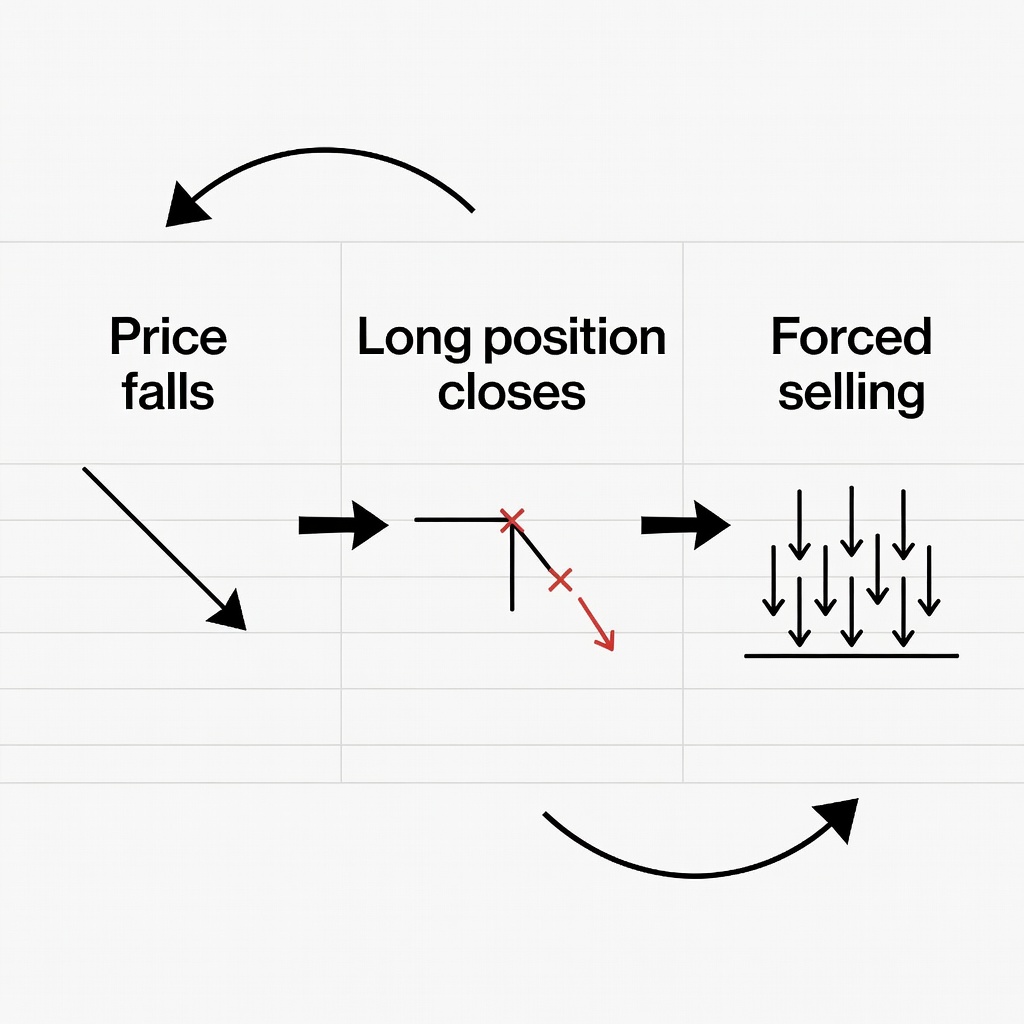
When a price decline brings a leveraged long to its liquidation threshold, the exchange sells to close the position. That sale can push the price lower and trigger the next forced sale. In a fast decline, traders may have little time to add collateral or close positions themselves. The resulting selling pressure need not reflect a change in either asset’s underlying outlook.
November 2026 had already seen several heavy liquidation days, with totals on some days exceeding $300 million and reaching as high as $1 billion. What distinguished the November 27 episode was how much leveraged exposure reportedly unwound in half an hour.