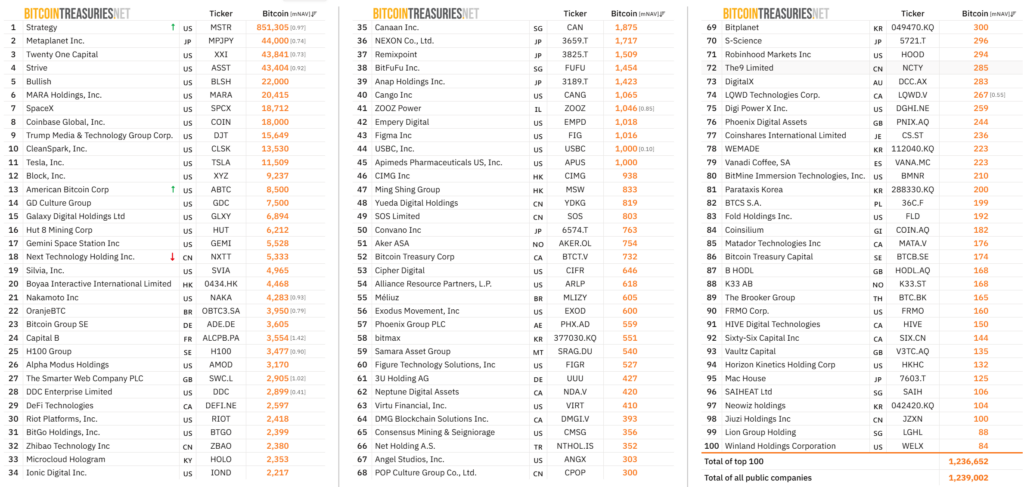
MicroStrategy chairman Michael Saylor argued on November 27, 2026, that Bitcoin need not replace the dollar at the checkout to compete for people’s savings. He was responding to economist Jeffrey Tucker, who argued that an asset must be used in exchange to qualify as money. Strive CEO Matt Cole also challenged Tucker. Together, the two executives’ companies held about 894,700 BTC, giving their shareholders a financial stake in the savings argument.
Two different tests for money
“There is no such thing as money that is not used in exchange,” Tucker wrote. He argued that nothing in monetary history supported Bitcoin advocates’ expectation that belief in a store of value could make it the world’s most valuable asset. Tucker, founder of the US think tank Brownstone Institute, was an early Bitcoin promoter. According to a Brownstone episode description, he said he soured on the network after the 2015–2017 dispute over how many transactions it should handle.
Saylor’s answer distinguished the asset people spend from the one they keep. “Jeffrey, a gold-backed banknote could pay the baker, the miller, and the farmer while the gold stayed in the vault,” he wrote. The dollar no longer has that backing: President Richard Nixon ended dollar-to-gold conversion in 1971. Saylor’s point was that people can pay in dollars while saving in stocks, property or gold. He put Bitcoin in competition with those assets, rather than claiming it had displaced dollars in everyday trade.
Cole turned Tucker’s criticism back on defenders of the dollar. He argued that the US could not indefinitely finance deficits by printing money and expect the dollar to remain the world’s reserve currency. Treasury data showed US public debt passed $40 trillion for the first time in August 2026. The dollar nevertheless retained its reserve status: the International Monetary Fund put its share of central bank foreign exchange reserves at 56.7% in the second quarter of 2026.
What the treasury holdings show
Bitcoin Treasuries tracked 196 public companies holding about 1.24 million BTC. MicroStrategy ranked first with 851,305 BTC and Strive fourth with 43,404 BTC. Their November purchases differed: BeInCrypto reported that Strive continued to add Bitcoin as its price fell, while MicroStrategy slowed its buying.
Those holdings document demand for Bitcoin as a treasury asset, not its use in exchange or its ability to preserve value. MicroStrategy’s filing put its average purchase price at $75,456 per coin as of early November. By the time of the debate, Bitcoin had fallen below that level, leaving the holdings worth less than their acquisition cost. MicroStrategy shares had also lost nearly half their value over the preceding year.