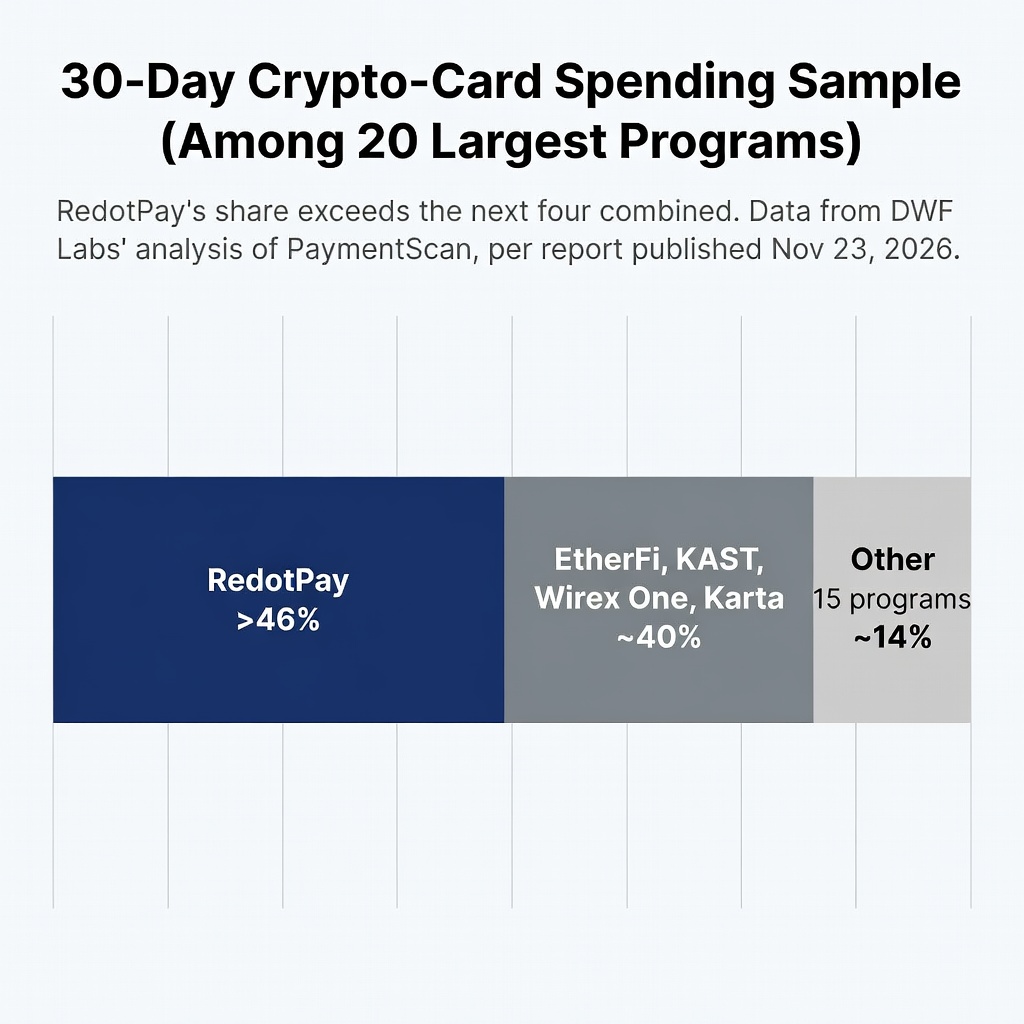
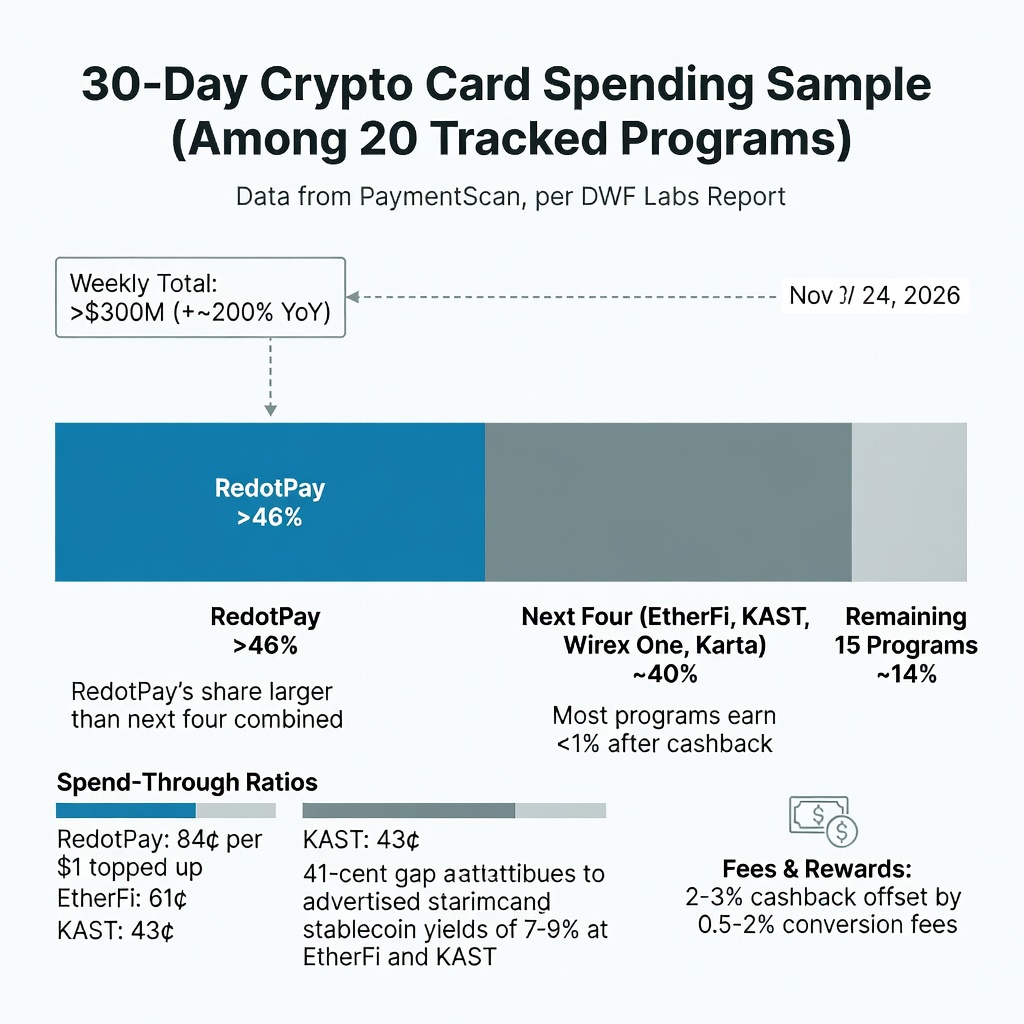
Weekly spending on crypto cards surpassed $300 million, an increase of nearly 200% from a year earlier, according to a DWF Labs research report published November 23, 2026. Coverage published November 24, 2026, based on that report and first carried by Crypto.news, said the figure comes from DWF’s analysis of PaymentScan data. In a separate 30-day sample, RedotPay accounted for more than 46% of spending, while most card programs earned less than 1% of spending after cashback.
Those are not the same measurement. The weekly total is a growth snapshot. The shares describe one 30-day window among tracked programs. DWF’s report uses those 30-day spending shares together with a separate weekly growth figure, and that pairing does not establish whether the combined share of the five leading programs rose over the past year.
Where the sample spending sat
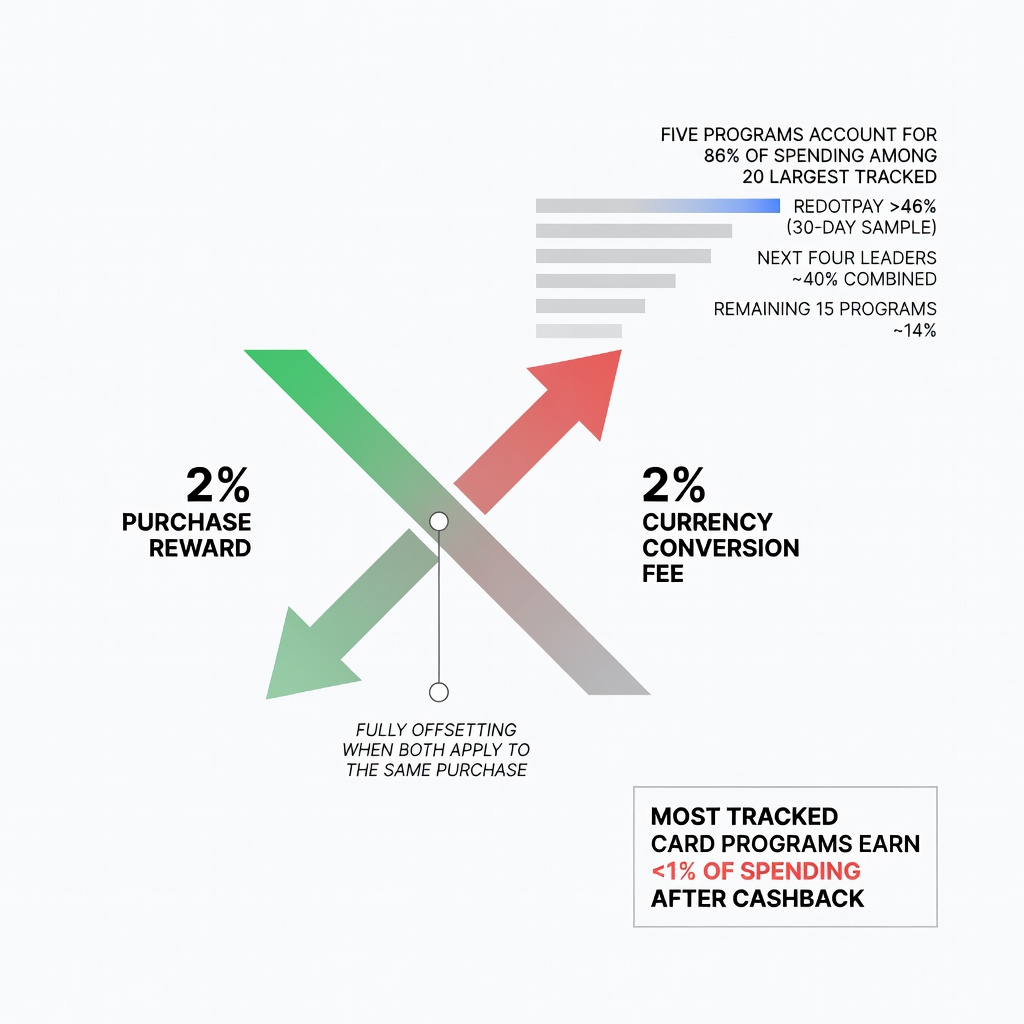
Among the 20 largest programs tracked, five — RedotPay, EtherFi, KAST, Wirex One, and Karta — accounted for 86% of spending. RedotPay’s share was larger than the next four combined. Those four represented roughly 40% of spending in the sample; the remaining 15 programs accounted for about 14%.
That is a description of where observed card spending landed in the window PaymentScan data covered. It is not, by itself, evidence that users of the largest programs kept more after fees, or that the leaders earn a durable margin.
Top-ups and card purchases diverge
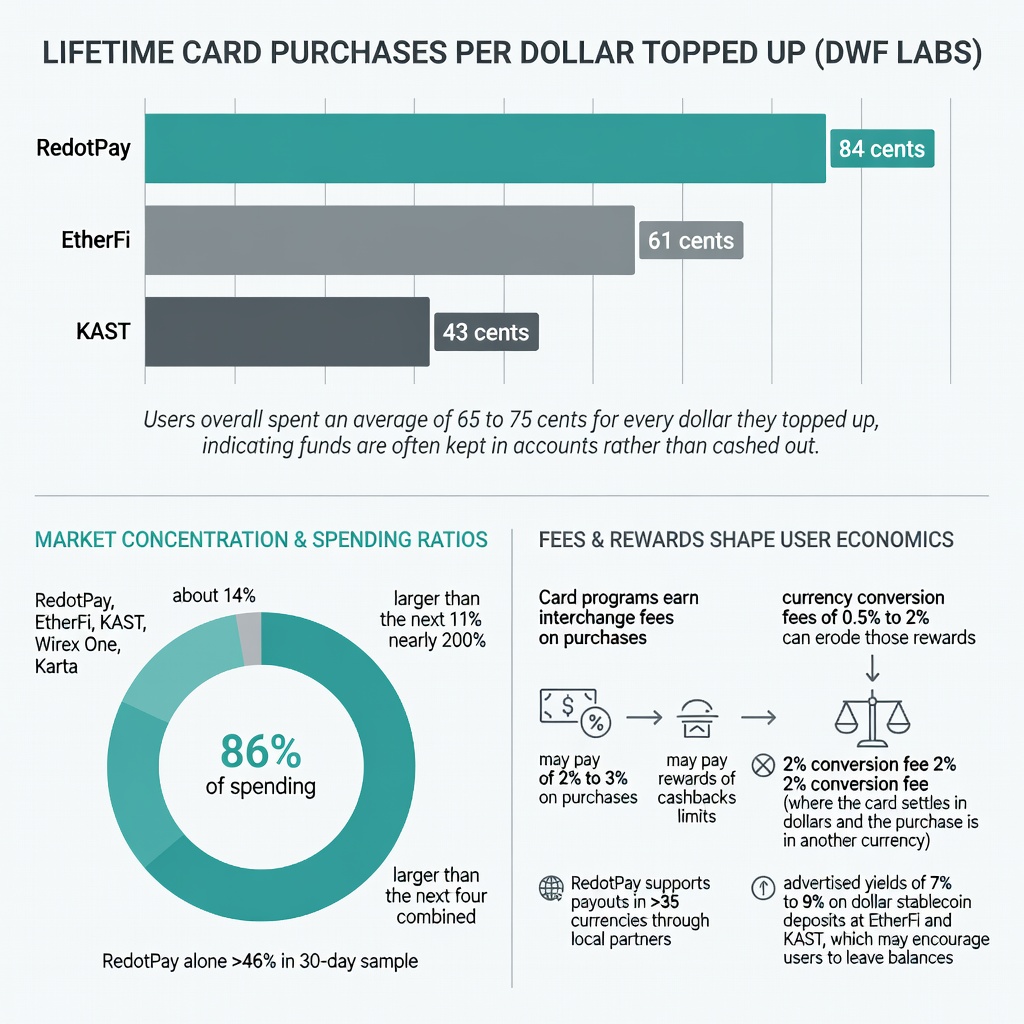
Users spent an average of 65 to 75 cents for every dollar they topped up. DWF read that ratio as a sign that people were keeping funds in their accounts rather than cashing out.
A lifetime comparison in the report split the larger names further. DWF put RedotPay at 84 cents of card purchases per dollar topped up, EtherFi at 61 cents, and KAST at 43 cents. That is a 41-cent gap between RedotPay and KAST for every dollar funded. DWF attributed the gap to advertised yields of 7% to 9% on dollar stablecoin deposits at EtherFi and KAST, which may encourage users to leave balances in those apps.
The spend-through ratios are observed figures. The yields are advertised rates, and the link between them is DWF’s explanation, not a test of why each user held funds. The report does not show that those advertised yields were paid, or for how long.
What rewards leave after fees
Card programs earn interchange fees on purchases and can charge separately for asset conversion, top-ups, or cash-outs. DWF found that programs may pay rewards of 2% to 3% on purchases, with some capping what a customer can earn. Currency conversion fees of 0.5% to 2% can erode those rewards. At the top of the range, a 2% conversion fee would completely offset a 2% cashback reward if both applied to the same purchase — including where the card settles in dollars and the purchase is in another currency.
On the issuer side, the reported remainder is thin: most programs earn less than 1% of spending after cashback. A larger weekly spend total and a sustainable share of that spend are different claims. The research supplies the volume figure and records the sub-1% result; it does not show that this remainder covers the rewards being offered.
RedotPay supports payouts in more than 35 currencies through local partners, according to DWF. That is a product detail in the report, not a measure of what users retained after conversion fees.
Stablecoin float and card-linked credit
The report said some providers are experimenting with issuing stablecoins in order to earn revenue on funds held in their apps, citing KAST’s work with M0 and EtherFi’s launch of ether.fi USD through Ethena. DWF estimated that roughly $48 million in idle EtherFi deposits could generate about $2 million a year at a 4% yield. That is an estimate that assumes the 4% yield, not reported revenue.
Lending is described as a separate channel already in use. In August, EtherFi expanded its Cash offering with an Aave market on Optimism, allowing customers to borrow against their portfolios and spend the proceeds through the card. DWF said loans through that Aave V4 instance had exceeded $47 million. The figure is a reported loan balance. The account of the report does not include default rates, what the credit cost users, or how much of the borrowed amount became card spending.
What the growth figure supports
The jump in weekly crypto card spending is evidence that a segment of users is routing digital-asset balances into everyday payments, not only into trading. DWF Labs said users are using crypto neobanks to hold dollar balances and earn yield while making purchases.
The same material leaves the commercial result open. It does not show that most programs clear much more than rewards once cashback is paid, and it does not show that concentration among the five leaders increased over the year. Later PaymentScan data may clarify whether that combined share is rising. Until then, the documented picture is a weekly spend total above $300 million, a 30-day sample in which five programs accounted for 86% of spending, lifetime spend-through well below a full dollar at EtherFi and KAST, and issuer take rates that are often under 1% of spending after cashback.